Choosing a finish
Render Types Compared for Aylesbury Homes
Sand and cement, silicone, acrylic, monocouche and lime are the names that come up. This page says what the sources opened for it actually state about each, names the rest without describing them, and lists what to ask whichever kind is on a quote.
The names, side by side
Quotes tend to use a type name and leave the reader to guess what it means. The table below keeps to what published sources state, and says so where they say nothing.
| Type | What the sources opened say | Worth asking |
|---|---|---|
| Sand and cement | The manufacturer’s beginner’s guide calls it the most common make-up of render. | Whether a finishing coat or paint goes on top, and how cracks are handled. |
| Silicone | Ready-mixed in tubs, a resin-based finish, and described by its maker as water-resistant and breathable. | The name of the product and its data sheet. |
| Acrylic | Contrasted with silicone by the same maker, which says silicone is the water-resistant one. | Why it is on the quote in place of another finish. |
| Monocouche | Named as its own category in published price tables. No manufacturer’s description was read for this page. | What thickness goes on and how it is finished. |
| Lime | The council and Historic England both discuss lime and breathability for older walls. | Where lime is proposed, which kind, and who has used it before. |
Where a row says little, the page is being honest. A longer comparison would need sources that were not available to read when it was written, and padding it from memory would defeat the point.
Sand and cement
Baumit calls sand and cement the most common make-up of render, and describes a classic cement or lime-cement render as the most basic type. Older walls bring a separate question, because the council’s appraisal says cement-based render lacks the breathability of lime-based mortars. Both the council and Historic England have things to say about it on the older homes page.
Source: Baumit’s beginner’s guide to rendering. Viewed 19 November 2026.
Silicone
The same manufacturer describes its silicone finish as ready to use, resin-based and applied with a scratched or dragged grain, and says it differs from the acrylic kind in being water-resistant:
Unlike their acrylic render counterparts, silicone, breathable renders are water-resistant.
Source: Baumit’s beginner’s guide to rendering, viewed 19 November 2026.
A later post from the same maker adds that silicone render is typically supplied ready-mixed in tubs, where traditional sand and cement render is not. Both are a maker’s claims about its own products, which is why the table asks for a data sheet. Another maker’s silicone product may behave differently.
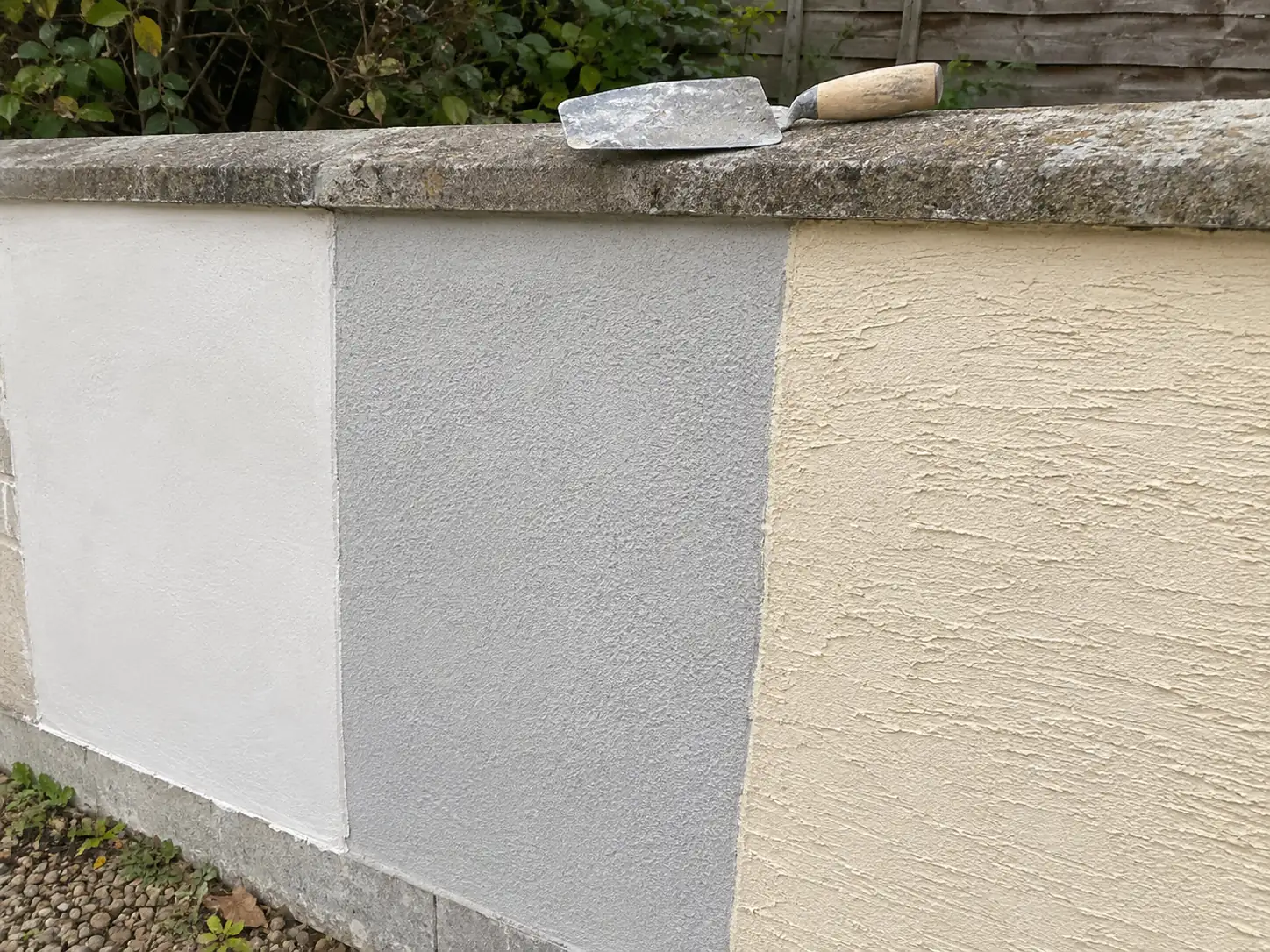
Acrylic, monocouche and lime
Acrylic appears above only as the thing silicone is set against. Monocouche, the one-coat through-coloured kind, shows up in price tables of its own, and the prices page gives the published figure. Lime is the subject of the next page. None of the three is described here because no page that described it could be read, so any claim made for them belongs to the person quoting.
Asking about the product
Whatever type is proposed, these questions are fair:
- Which product exactly, by manufacturer and name?
- Where is its data sheet, and what temperatures does it list for application?
- Is it a complete system, or are coats from different makers being mixed?
- How is it finished at corners and where it meets other materials?
- What does it need by way of upkeep?
Temperatures matter in a British winter. Baumit’s winter guide says many conventional render products need ambient and substrate temperatures between +5°C and +30°C
while being applied and during the first curing, and that standard products should not be applied at or below 0°C. Source: Baumit’s winter working guide for 2026.

Want to compare quotes?
If a type has been suggested, name it and include a wall picture.