Colour and finish
Render Colour and Finish in Aylesbury: Choosing Well
Colour and texture work together, and rendered walls look different in different light. This page uses what the council’s appraisal and a manufacturer say, points to the conservation area rules and keeps opinions about taste to a minimum.
What the town already looks like
Buckinghamshire Council’s conservation area appraisal describes the town centre’s walls:
The other predominant wall finish is painted render, often scored to give the impression of stonework. Twentieth century buildings stray away from red brick, commonly using a darker brown brick, usually in stretcher bond.
Source: Buckinghamshire Council, Aylesbury Conservation Area Appraisal and Management Plan (April 2026), paragraph 5.33, viewed 19 November 2026.
That describes the historic core, not every Aylesbury street, and an estate of newer houses will have its own habits. Walking the street and noting the roof, the brick, the window frames and the neighbours’ walls tells more than any chart does.
Colour and texture together
Baumit’s guide to silicone render, colours and finishes makes a point that applies to any render:
It is important to consider both colour and texture together, as the same colour can appear slightly different depending on the surface finish and lighting conditions.
Source: Baumit’s guide to silicone render, colours and finishes, viewed 19 November 2026.
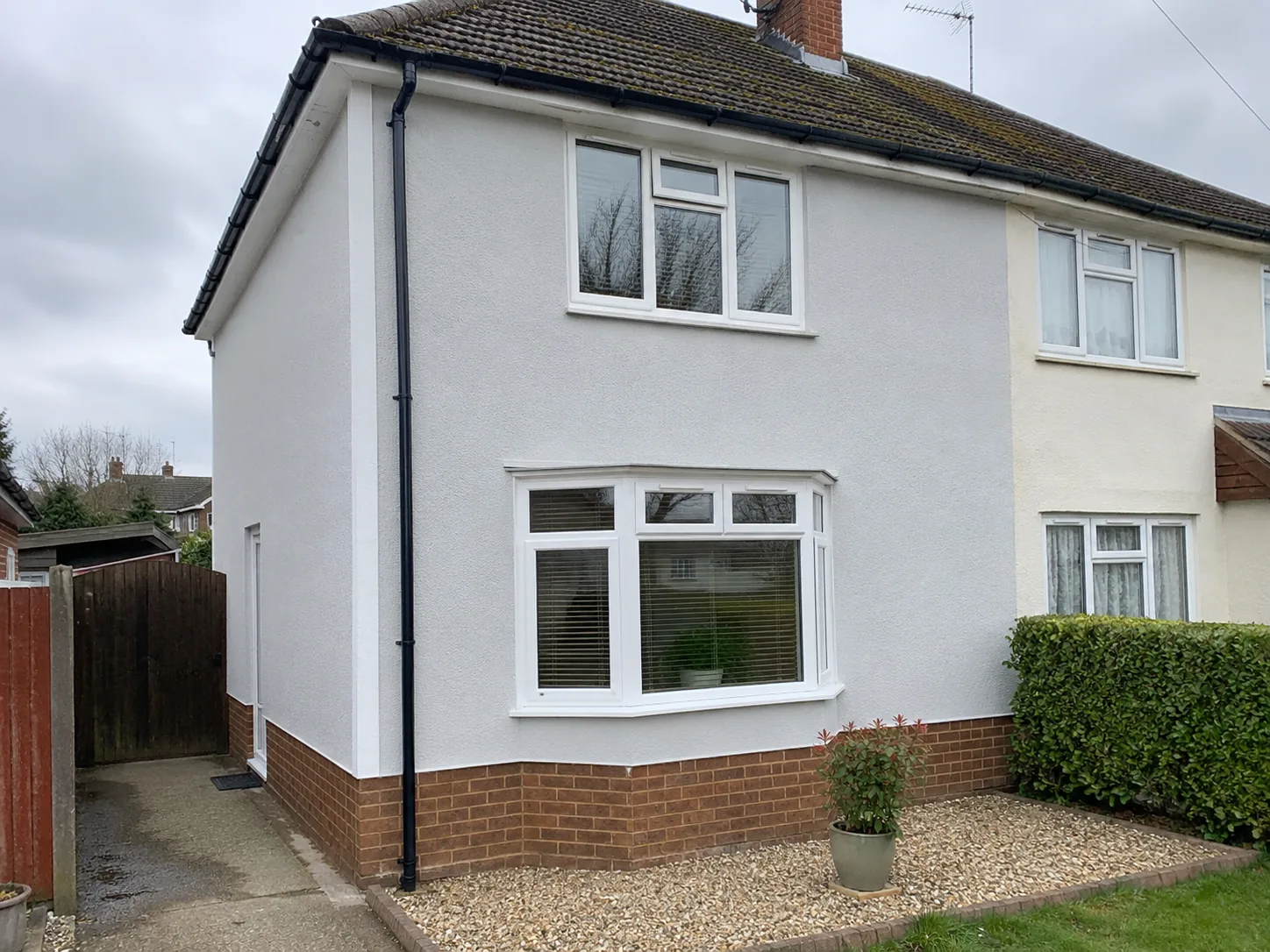
The photograph above shows a house in a pale grey finish with white corner beads and a brick plinth. It is one house and one finish, and it is there to show how a colour sits next to brick and a roof, not to recommend a grey.
The same guide notes that not every colour in a maker’s range comes in every product, and that colour suitability should be checked against the finish chosen. That is worth asking about before falling for a sample card:
Not every Baumit Life colour is available in every render product. Colour suitability should always be checked against the selected finish and system requirements.
Source: Baumit’s guide to silicone render, colours and finishes, viewed 19 November 2026.
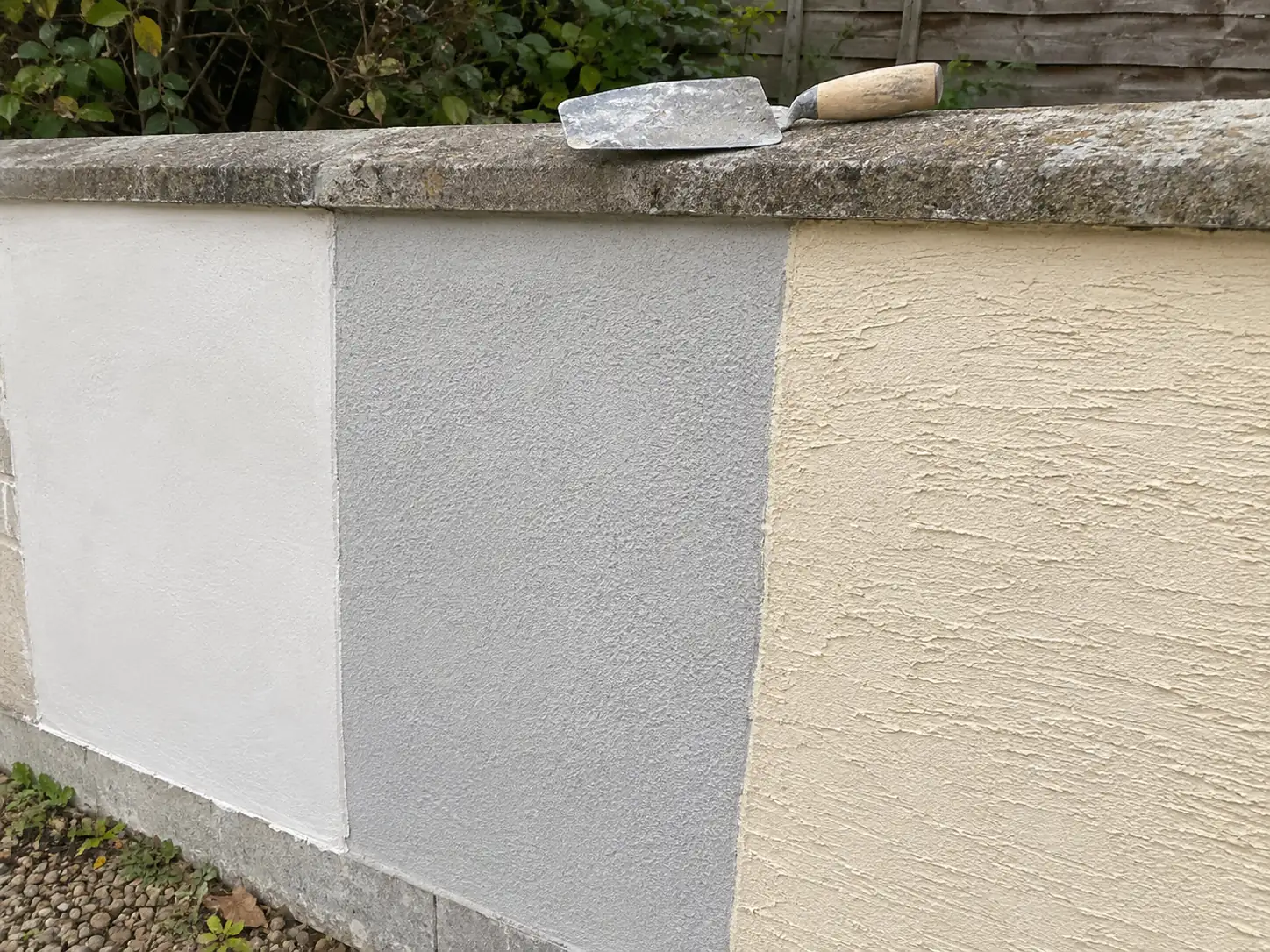
Three finishes sit side by side in the picture above, a smooth pale one, a light-grey fine one and a warm cream scraped one. It shows how much texture alone changes a surface, which is why a sample board on the wall tells more than a printed card.
In a conservation area
Colour and type of render are exactly what the council looks at in a conservation area. The Planning Portal’s words on conservation areas and render are on the rules page, and the council’s appraisal says of one area’s terraces that some have been unsympathetically rendered or painted
. Source: Buckinghamshire Council, Aylesbury Conservation Area Appraisal and Management Plan (April 2026), paragraph 8.116. Whether a colour is acceptable is for the council to say, and asking first is easier than asking afterwards.
Questions to put to a renderer
- Can I see a sample board in daylight, on the wall, before the final choice?
- Is my colour available in the product on the quote?
- How will the finish be kept consistent across the whole wall?
- For a conservation area property, has the council been asked about colour and type?
Choosing a finish?
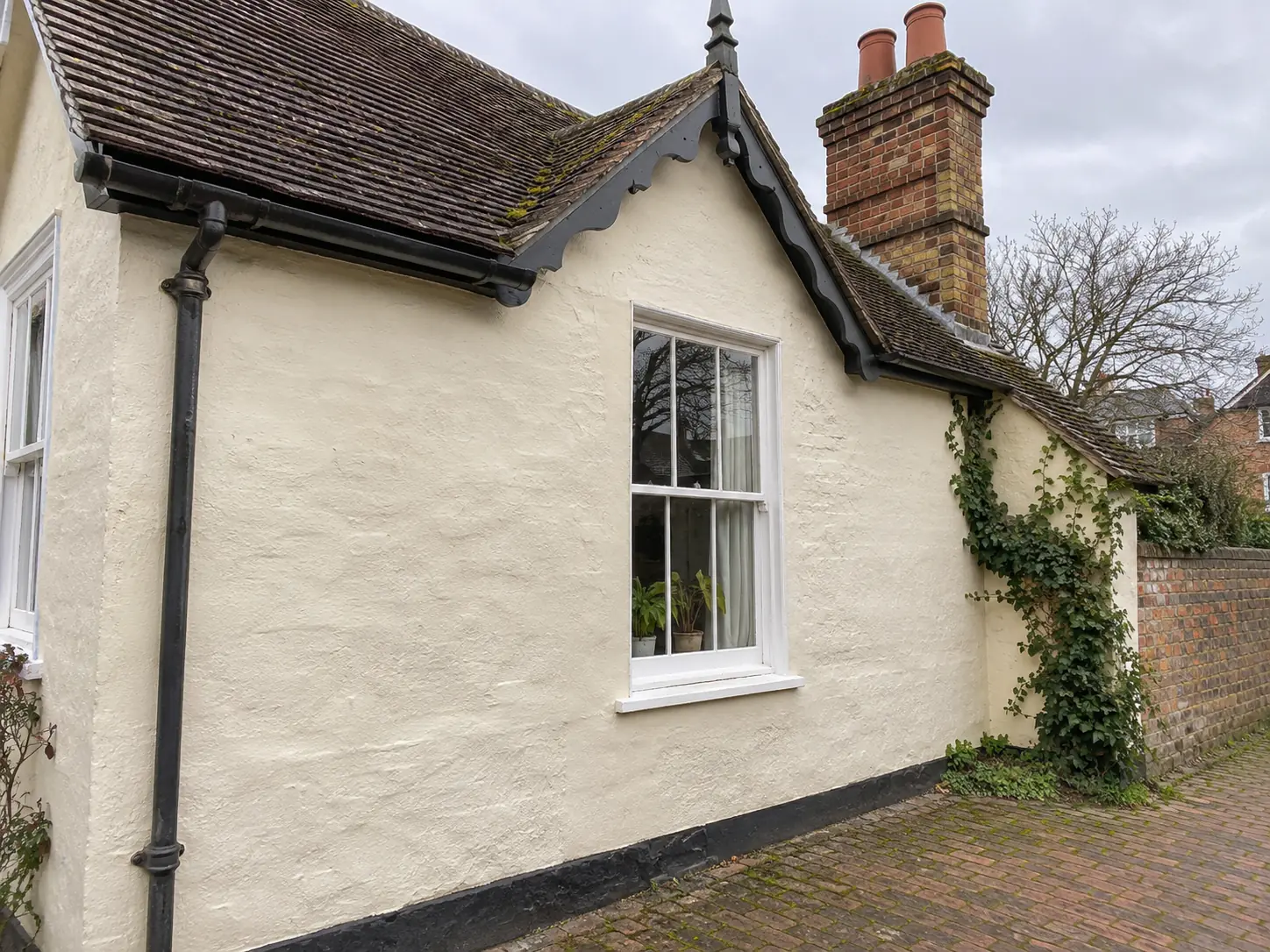
Mention colours you like and the photo can show the neighbours’ walls too.